
In RNA sequencing (RNA-seq), the Ribo-off rRNA Depletion Kit V2 provides a critical step by removing ribosomal RNA (rRNA) from total RNA samples. This removal enriches messenger RNA (mRNA) and other non-coding RNAs (ncRNAs), enabling clearer insights into gene expression and transcriptome analysis. The kit is indispensable in research areas from cancer genomics to environmental microbiology, where precise RNA sequencing can reveal genetic variations, novel transcripts, and more.

Why rRNA Depletion Matters in RNA-Seq
rRNA constitutes 80-90% of total RNA in cells, and its presence in samples can overshadow the detection of mRNAs and ncRNAs during RNA-seq. By selectively depleting rRNA, the Ribo-off V2 kit enhances the efficiency of transcriptome sequencing, leading to improved data quality. According to the National Institutes of Health (NIH) (NIH.gov), removing rRNA from RNA samples is essential for gaining accurate insights into cellular mechanisms. This is particularly important in fields like neurogenomics and oncology, where fine-tuned gene expression profiling reveals essential information about disease pathways (NCI Cancer Research).
Features of the Ribo-off rRNA Depletion Kit V2
The Ribo-off Kit V2 is designed to remove both cytoplasmic and mitochondrial rRNAs. This improved design ensures compatibility with samples from various organisms, including humans, animals, and plants. CDC’s Genomics and Precision Health (CDC.gov) highlights the necessity for reliable depletion kits, especially in studying complex transcriptomes like those in plants and microorganisms.
Applications of the Ribo-off Kit V2
- Cancer and Disease Research
In cancer research, rRNA depletion allows researchers to identify rare transcripts and mutations. Studies funded by the National Cancer Institute (NCI) (NCI Overview) demonstrate how rRNA-depleted RNA-seq data have helped isolate biomarkers critical for cancer diagnostics and therapy development (NCBI – RNA Biomarkers). - Microbiome and Environmental Studies
Metatranscriptomics, which examines the collective RNA from microbial communities, depends heavily on high-quality rRNA depletion. NOAA Fisheries Science (NOAA.gov) utilizes rRNA-depleted RNA sequencing to investigate microbial activity in ocean ecosystems. Studies from the US Geological Survey (USGS.gov) further illustrate how rRNA depletion reveals microbial community interactions and responses to environmental changes. - Single-Cell Sequencing
Single-cell RNA sequencing (scRNA-seq) allows researchers to explore gene expression at the cellular level. The Ribo-off Kit V2 optimizes RNA integrity in single cells, an essential factor for accurate scRNA-seq results. The Human Genome Project (Genome.gov) has noted that single-cell technologies are transformative in genomics, and rRNA depletion significantly contributes to the depth and accuracy of data obtained from scRNA-seq experiments. - Infectious Disease Research
RNA sequencing has become a powerful tool in identifying pathogen-host interactions. For instance, NIH Research on COVID-19 (NIH COVID-19 Resources) used RNA-seq with rRNA depletion to better understand SARS-CoV-2 infection mechanisms and immune response in patients. - Genomic Studies in Developmental Biology
National Institute of Child Health and Human Development (NICHD) research on gene expression during embryonic development relies on high-quality RNA-seq data. Here, the Ribo-off Kit V2 helps to exclude rRNA interference, allowing scientists to capture gene expression patterns vital to developmental biology.
Protocol and Workflow
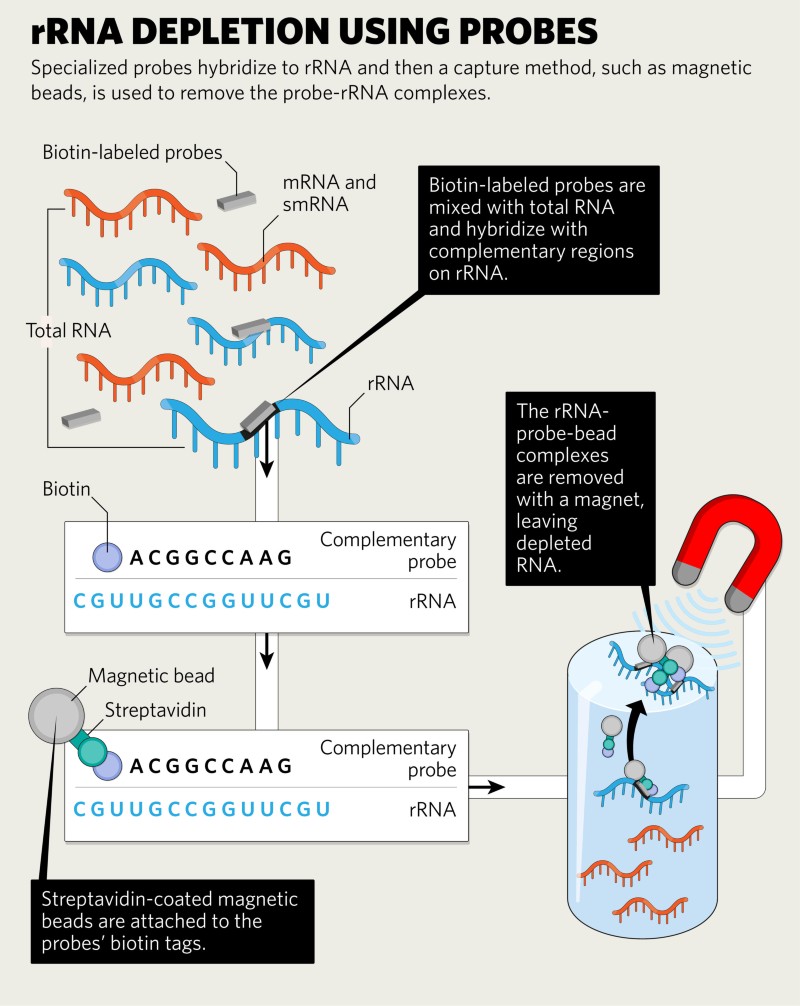
The Ribo-off rRNA Depletion Kit V2 protocol involves hybridization and selective enzymatic digestion of rRNA sequences, leaving other RNA types intact. The National Center for Biotechnology Information (NCBI) (NCBI) provides open-access resources on optimizing RNA-seq protocols, including rRNA depletion, to ensure consistent and replicable results. Additionally, a study from Stanford University (Stanford.edu) confirms that optimized rRNA depletion leads to significant data enrichment in RNA sequencing.
Versatility Across Research Areas
From animal models to human clinical research, the Ribo-off Kit V2 adapts well to various RNA types, which is ideal for RNA-seq in complex systems. The Environmental Protection Agency (EPA) (EPA.gov) and Food and Drug Administration (FDA) (FDA Science & Research) have emphasized the importance of these methods for ensuring environmental and pharmaceutical research quality, respectively.
Environmental and Agricultural Applications
The United States Department of Agriculture (USDA) (USDA.gov) highlights the need for high-precision rRNA depletion in studying crop genetics. By removing rRNA, researchers can better understand crop resilience, gene expression under stress, and productivity, supporting advancements in sustainable agriculture.
Conclusion
The Ribo-off rRNA Depletion Kit V2 exemplifies innovation in RNA sequencing preparation, offering enhanced versatility, high specificity for rRNA removal, and compatibility across research fields. As researchers strive for accuracy in transcriptomic data, this kit is proving indispensable. Studies funded by institutions such as Harvard University (Harvard.edu) and University of California, Berkeley (Berkeley.edu) emphasize its importance in achieving reliable data for genomics and beyond.
For further reading, refer to NIH’s Genomics Research (Genomics.nih.gov), which covers a range of advancements in RNA sequencing tools and applications. The Ribo-off Kit V2, with its effective rRNA depletion, stands as a crucial asset in modern research, enabling scientists to gain more precise insights into the molecular landscapes they investigate.